How to Teach Your Child Phonics: A Parent’s Guide
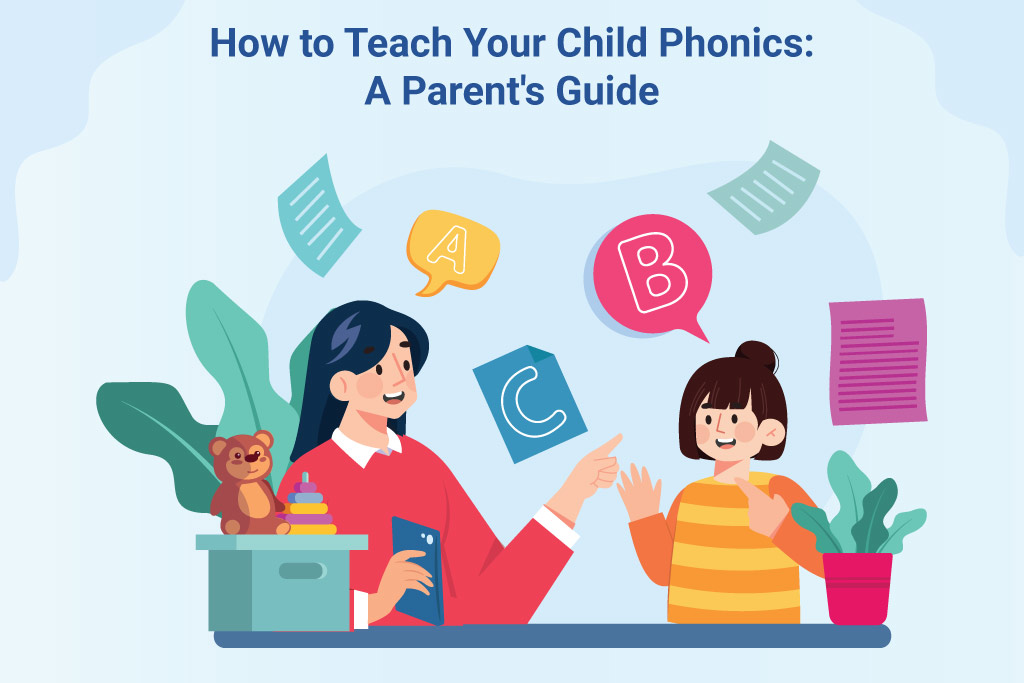
Do you want your child to be an excellent communicator and develop strong language skills? Phonics, the foundation of reading and spelling, could be the answer. It helps children connect sounds with letters to make sense of words. With the right approach, parents can play an important role in their learning at home.
If you have ever wondered how to teach your child phonics, this guide will give you clear, step-by-step strategies to make the process simple and effective.
Looking for expert phonics support?
A] What is Phonics and Why is it Important?
To teach children how to read and spell, phonics is a key method that links sounds (phonemes) with letters or groups of letters (graphemes). By learning these connections, children can blend sounds together to read new words. For example, knowing that the letter “s” makes an /s/ sound helps them decode words like “sit” or “sun”.
In preschool and early school years, phonics is especially important as it builds a strong foundation for literacy. It helps children develop essential skills such as reading fluency, comprehension, and confidence at an early age. Phonics also reduces the need for memorisation, as children can apply their skills to an ever-growing vocabulary. With a strong base in phonics, children become independent readers and writers, preparing them for long-term academic success.
B] How to Teach Your Child Phonics at Home: Step-by-Step
With the right strategies, teaching your child phonics at home can be both rewarding and enjoyable. The role of parental engagement in early childhood is especially important here, as consistent support at home strengthens what children learn.
- Introduce Letter Sounds Before Names: Start by focusing on the sounds that letters make instead of their names. For example, teaching them that the letter “m” makes the /m/ sound, rather than simply calling it “em”. It helps build phonemic awareness, the essential skill of hearing and identifying sounds in words. When children start recognising sounds, they can start blending them to form words.
- Use Multisensory Teaching Methods: Children learn best when multiple senses are engaged. Combining auditory practice through songs and rhymes, visual aids like flashcards or picture books, and kinaesthetic activities like tracing letters in sand reinforces sound-letter connections. This also encourages different learning styles while keeping lessons fun and memorable.
- Practice Sound Blending: Sound blending is an important step in phonics learning. You can encourage your child to combine individual sounds into simple words. Start with short, easy words; for example, blending /c/ /a/ /t/ makes “cat”, and gradually introduce more complex ones. Guide them to read aloud and boost confidence by praising their efforts.
-
Maintain Daily Short Practice Sessions: Aim for daily sessions of 10-15 minutes; make them part of your child’s routine, as consistency is more important than long study periods. To keep children engaged without overwhelming them, keep the practice sessions short. Include games, simple reading tasks, and songs to make practice fun and effective.
By following these steps, starting with sounds, using multisensory methods, encouraging blending, and maintaining regular short sessions, you can help your child develop reading and spelling skills. When done with patience and encouragement, teaching phonics at home becomes a natural and positive part of your child’s early education.
C] Which Activities and Resources Make Phonics Learning Fun?
For children, learning becomes effective when it is interactive and enjoyable. Including simple tools like flashcards with letters and sounds helps children to practise recognition, while picture books encourage them to connect images with words.
Storytelling, songs, and rhymes are among the powerful tools for phonics. Storytelling allows children to apply phonics in meaningful contexts, making reading more exciting. Repetition through music and rhythm also helps them remember sounds and words more easily.
Several apps and online tools provide interactive games, stories, and activities. These adapt to the child’s learning pace, making technology a valuable support in early reading.
For parents, programmes like Jolly Phonics are designed as engaging resources in phonics for kids, using songs, actions, and stories to make learning memorable. This multi-sensory approach keeps children engaged while reinforcing sound-letter connections. Parents who want extra guidance can also explore a phonics course for parents, which provides practical strategies to support children’s learning at home. By combining these activities and resources, both parents and teachers can make phonics fun and effective, helping children build a lifelong love for reading.
D] Mistakes to Avoid When Teaching Your Child Phonics
When teaching phonics, it is important to avoid some common mistakes that can hinder your child’s progress. One such error is skipping sounds and moving to full words too quickly. They need time to excel in individual sounds before they start blending them. This can be overwhelming and confusing; instead, present sounds gradually and strengthen learning through repetition.
Additionally, many parents forget to review previously learnt sounds. Regular revision improves memory and develops confidence. When these mistakes are avoided, it helps your child develop a stronger and more effective foundation in both reading and spelling.
Looking for expert phonics support?
Conclusion
Teaching multisyllabic words may require patience and attention to detail, but it doesn’t have to be dull and boring. By incorporating a variety of fun and engaging elements like music, visuals, and creative tasks, educators can make the learning experience both memorable and enriching.
Do you want your child to become an excellent communicator and build a strong language foundation? Contact us, a trusted institute offering phonics classes for kids in Mumbai. With our expert teaching methods, children develop effective language comprehension skills.

Hema Dave
Stemming from the aspiration to nurture and inspire young minds, Hema started her professional journey into education 20+ years ago. She founded 'Phonic Smart' as a trained educationist, an institute committed to equipping children with phonics skills and helping parents and teachers implement them effectively. Her diverse skill sets, encompassing teaching, teacher training, and coaching allow her to contribute valuable insights to the education industry.